Showing posts with label taxes. Show all posts

Monday, June 22, 2009

Unemployment - The Real Story

The word of the day today is unemployed. Some of you, especially during these tricky economic times we're in, might be very familiar with this word. Some of you probably think it has something to do with you. Others of you think it has nothing to do with you, but is all Bush's fault, the bankers fault, congress's fault, Obama's fault, etc., etc. Well none of that is true. The reason you, or any one else is unemployed right now is because of aliens.

No, I'm not talking about the illegal kind that come in from Latin America, Eastern Europe, or Africa. No, REAL aliens. Like the kind that come from the planet Schorgatron-56. They are talking over. So far they have completely infiltrated the tax law industry, the dentist industry, and the American auto industry. And, for over a century now they have been sucking out the brains of our legislative, executive, and judiciary branches of government in the US. 

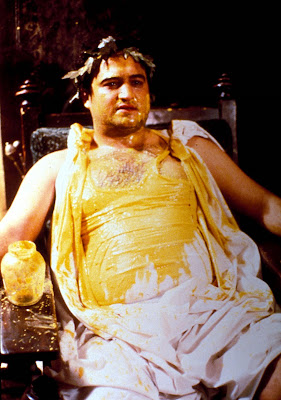
Why do they do it? Well, doing human jobs is apparently a better time than abducting and probing drunk farmers. And they do it for the same reason you go to Cancun and get wasted. Or go to the beach and have a bonfire and make aborigine chants late at night. It's a cheap thrill. Yes, that's right. Aliens like to have a good time. And, that puts them in good company. In fact, some famous crazy party animals out there who you thought were human are/were actually aliens. Lindsay Lohan - alien. John Belushi - alien. Kevin Bacon - alien. Paris Hilton - three aliens. Nicole Richie - an embryo of an alien.
So what should we do? Nothing. Just let them finish up here and they'll leave. Your boss will be begging for you to come back in no time.

Monday, March 9, 2009

The New Era of Statism

I have a question that I believe is on the minds of a lot of people. Since when did statism become so attractive? I bring this up in light of of the recent economic policy of the Obama administration. The bailouts under the Bush administration were folly. The extended bailouts with pet projects that are entirely unrelated to boosting growth and employment signed into law by the Obama administration were folly. The mortgage plan to cover the collective buttocks of millions of Americans who can't afford their mortgages rewards bad behavior. The continued bailout mentality for the financial, auto, and mortgage industries is not just misplaced, but incredibly counter-productive and yes, statist. The government is very good at creating new dependents, and that is exactly what it is doing with the bailouts, attaching the money it lends to preferred stocks and huge chunks of the company. That kind of behavior frightens current stock holders and future investors. With the flight of new and old investment those companies continue to hemorrhage, forcing the government to bailout their bailouts. And, in the big picture, government becomes the de facto controller of a massive part of the private sector (ie: the banks).

Here is the definition of statism as defined by oh so reliable wikipedia (I corrected some spelling mistakes):

Statism (or Etatism) is a term that may refer to any of the following:

1. Government having a major role in the the direction of the economy, both through state-owned enterprises and indirectly through the central planning of overall economy.

2. The "concentration of economic controls and planning in the hands of a highly centralized government."

3. The Fascist concept of statism which holds that "basic concept that sovereignty is vested not in the people but in the national state, and that all individuals and associations exist only to enhance the power, the prestige, and the well-being of the state. The fascist concept of statism repudiates individualism and exalts the nation as an organic body headed by the Supreme Leader and nurtured by unity, force, and discipline."
However, if all of the statist-leaning policies were not enough for you, charitable tax deductions will be significantly reduced or disallowed and the President and his administration aim to raise taxes during a recession, creating more unbalance by putting the most burden on the wealthy. You might think, "Well that doesn't affect me." Yes it does. First off, the tax increases on the wealthy are not going to cover the administration's new drive to overhaul the entire healthcare system and foster green energy with a cap and trade systems, so you can count on tax hikes hitting people who make anywhere upwards of $75,000 a year. In fact, there will be tax hikes all around, but Geithner and the Obama administration seem to think that the economy will be out of its "funk" by the time they actually take effect, which will be 2010 and 2011. However, they seem to forget that people react to these events prior to them happening. So, the announcement alone of tax hikes during this economic malaise is only exacerbating the crisis, as is evidenced by the continued downturn of all markets. Oh, and lest I forget, we will soon enter an age where more people do not pay taxes than those who do. That means that more people will feel entitled to government services without paying a single dime. Under the current Obama tax plan, there are a lot of breaks and rebates for people who do not pay taxes, and the lower income tax brackets will become smaller.

Just had to get that off my chest. Some of Obama's projects might even be good, or at the very least well-intentioned, but he needs to wake up and realize that now is not the time to overhaul the health care system or put a cap and trade policy into effect. Just like any family or individual, the government should not spend money it does not have. We got into this economic predicament by spending more than was in our means and taking on bigger loans than we should have. Explain to me Tim Geithner, Ben Bernanke, and President Obama how we are going to get out of this problem by doing the same thing that got us into it. All of these trillion dollar pump-priming initiatives and this $3.6 trillion budget are going to do is increase debt and the size of government, cause rampant inflation, and prolong the recession, perhaps turning it into a depression. It is also important to remember that the money that is being spent now does not yet exist. The government is spending money on expected revenue. But, how is it going to have this money to spend if it negates the incentives to earn it with higher taxes and cutting deductions? If you have a problem with it, raise your hand.

But this stupidity really is not surprising. I mean, since when did the government do a good job of managing anything? Why do we seem to think that having the government take over the financial sector and the health care system is going to make things better? Just look at the SEC, FDA, SSA, TSA and the Department of Homeland Security. Are those good examples of administration? Do we truly want the government to take over our lives even more, with it's track record? I think not.

Wednesday, February 4, 2009

For Real Stimulus

Sometimes when you read this blog you chuckle. Other times I hope you think. Other times I hope you get confused. But today the blog is going to touch on some important stuff that most people should know. I got this article from Investment Business Daily. I think it was published either the fifth or the ninth (sorry, I cannot make out my grandmother's handwriting on the copy she sent me). I am in no way claiming this as my own work, but I am taking the time to re-write it on this blog verbatim for all of your benefit. Read on.
"Economy: Congress is ready to ram through a half-baked stimulus package costing as much as $1 trillion. But if it's stimulus we need, why not make it effective stimulus - tax cuts, say, instead of wasteful spending?

The massive new spending program that is being pushed by the congressional Democrats emboldened by their newly enhanced majorities may come up as soon as Tuesday, when they return from their holiday breaks.

Unfortunately, they've picked the least effective way to give the economy a boost. Those who argue for hundreds of billions of dollars for infrastructure projects and "green jobs" have it all wrong. We've tried those remedies before and found them wanting.

In the 1930s, for instance, we went on an infrastructure binge, building new roads, dams and schools; electrifying the rural south and enlarging our ports, among other major tasks.

Granted, some infrastructure improvement was called for. But all the activity didn't pull the country out of depression - not by a long shot. Unemployment averaged 17% in the '30s, and it wasn't until 1941 - the start of World War II - that GDP returned to its 1929 level.

Japan followed the same Keynesian game after its real estate bust of 1989. To the applause of many American liberals, hundreds of trillions of yen were spent on infrastructure, raising outlays on big projects from 6.5% of GDP in 1990 to 8.3% in 1996 - even more than contemplated under Obama's plan.

That didn't work either. The 1990s were a "lost decade" for Japan's economy, and the country is still stagnating. Its infrastructure boom did have one lasting legacy however: Japan is now the most heavily indebted nation in the OECD.

If President Obama and his fellow Democrats get their way, the U.S. may soon be trudging down the same path. Next year, reckons budget expert Stan Collender, the defecit may hit $1.3 trillion, or 8% of GDP, as Congress tries to spend its way out of recession. That's roughly $13,000 for every taxpayer.

Shouldn't we at least expect some big bang for our bucks? If so, and although it's not popular with his party, Obama might want to re-think his aversion to tax cuts. They'll actually work.

How do we know? Because they have in the past. In the '20s, '60s, '80s and again this decade, new presidents also faced grim economic conditions. Each time, the president - be it Coolidge, Kennedy, Reagan or Bush - cut taxes. And each time the economy boomed.

McKinsey & Co. estimates total losses of $1.4 trillion to $2.2 trillion due to the credit collapse. But this can be reversed by making the underlying assets profitable again. The fastest way to do this is to cut taxes on businesses and entrepreneurs, which will immediately lift the rate of return on assets and thus their value.

This in turn will bring more investment, more hiring and more income - all things that Obama has said he wants.

We're not making this stuff up. According to research cited by former White House economist Greg Mankiw, the economy expands by $1 to $1.40 for every $1 spent by government. But if you cut taxes instead, you really get results.

Mankiw cites a major study of tax cut changes dating back to 1947 showing that each $1 of tax cuts brings $3 in added GDP. This study is particularly significant because one of its authors, Christiana Romer, is Obama's chief economic advisor.

Simply handing blank checks to Congress and the White House, and letting them pass an ill-considered stimulus plan with little transparency and no checks on spending is a very bad idea. 

No stimulus would be better than a bad stimulus. And the only stimulus that's been shown to really work is cutting taxes.

Monday, December 8, 2008

Obama's Plan to spend us out of debt

As many of you may be aware President-elect Obama plans to initiate largest expansion into public works projects since the 1950s. He plans to rebuild infrastructure (from roads, bridges, and tunnels, to re-equipping schools nationwide), and he has cited it as a right for all children to have access to the internet. Here's his plan:

—ENERGY: “[W]e will launch a massive effort to make public buildings more energy-efficient. Our government now pays the highest energy bill in the world. We need to change that. We need to upgrade our federal buildings by replacing old heating systems and installing efficient light bulbs. That won’t just save you, the American taxpayer, billions of dollars each year. It will put people back to work.”

—ROADS AND BRIDGES: “[W]e will create millions of jobs by making the single largest new investment in our national infrastructure since the creation of the federal highway system in the 1950s. We’ll invest your precious tax dollars in new and smarter ways, and we’ll set a simple rule – use it or lose it. If a state doesn’t act quickly to invest in roads and bridges in their communities, they’ll lose the money.”

—SCHOOLS: “[M]y economic recovery plan will launch the most sweeping effort to modernize and upgrade school buildings that this country has ever seen. We will repair broken schools, make them energy-efficient, and put new computers in our classrooms. Because to help our children compete in a 21st century economy, we need to send them to 21st century schools.”

—BROADBAND: “As we renew our schools and highways, we’ll also renew our information superhighway. It is unacceptable that the United States ranks 15th in the world in broadband adoption. Here, in the country that invented the Internet, every child should have the chance to get online, and they’ll get that chance when I’m president – because that’s how we’ll strengthen America’s competitiveness in the world.”

(Incoming White House Chief of Staff Rahm Emanuel had talked about expanding broadband access, but this is the first time the transition has formally proposed it.)

—ELECTRONIC MEDICAL RECORDS: “In addition to connecting our libraries and schools to the Internet, we must also ensure that our hospitals are connected to each other through the Internet. That is why the economic recovery plan I’m proposing will help modernize our health care system – and that won’t just save jobs, it will save lives. We will make sure that every doctor’s office and hospital in this country is using cutting edge technology and electronic medical records so that we can cut red tape, prevent medical mistakes, and help save billions of dollars each year.”Now some of this plans actually make sense, but he has still been mum on what kind of cuts he is going to make if any. And other question, and it feeds off the issue I just cited is, WHERE IS ALL THIS MONEY COMING FROM? Our government has been dolling out trillions of dollars to bankers, lenders, and even some companies it has deemed as 'too big to fail.' So, in light of the fact that the dollar will be worth next to nothing in the next 6-18 months after the market reacts to this largess of meaningless paper printed out by the government, how does this same government expect to afford all these new initiatives? Since when did it make sense to spend money to get out of debt? Oh, that's right, governments can do that because they can print money by fiat to pay their debts...except they don't. They print money to support more systemically unsound debt which is bought and sold to bankers and lenders worldwide.
So I guess that was why I was a little taken aback when I heard that one of the public works projects to be undertaken was the world's largest ball of yarn (below is only a 1/20 scale replica).
Set to be 50 stories tall, the ball will be situated in the middle of Kansas to give people a reason to visit the state even if they don't have family there.

"It will provide a way for Kansas to regenerate a tourist industry that was once vibrant. It will also allow Americans to use the new cloverleaf that the public works project initiative will be building right next to the yarn ball," said President-elect Obama.

Marjorie Glotus of Topeka said, "It gives me renewed faith in the government. Since the Wizard of Oz came out I have been scorned by relatives who live in Wyoming, even though we do have a pretty good basketball team, but now that we have a federally funded Guinness-worthy ball of yarn, I hold my head up high."

It makes me giddy.

Thursday, October 16, 2008

Meet Joe the plumber

Move over Joe Six Pack, now there's Joe the Plumber. 

Last night he was referred to by John McCain in the Presidential debate after a video circulated of him asking Barack Obama about how his tax plan would affect him. His real name is Joe Wurzelbacher, and he hails from Ohio. 

A plumber by trade, he has worked for one company now for his entire career and has been able to work his way up into a position where he can now buy the company he works for. The problem he now sees is that he might be unable to buy that company now given the new tax bracket it would be put in under Obama's tax plan. While he says that 95% of all people will get a tax break, those who make more than $250,000 a year will not. Unfortunately, the small plumbing company makes more than that. Now, it doesn't matter so much that most of that money goes to paying salaries and reinvestment into the companies capital development, it just matters that it makes more than that arbitrary prescribed amount. When asked why he had to work so hard for so long just to get taxed more for his efforts, Obama told Joe that spreading the wealth around will help others achieve what Joe has been able to. 

Here's the video.

The cat is out of the bag. Obama's real policies aren't any different than the tax and spend democrats before him. It's a Robin Hood mentality. 

I'm tired of this liberal conception that tax cuts have to be 'paid for.' Obama's explanation is that if the middle class gets a tax cut, the difference has to be made up somewhere, and so those who have more should pay more. Why does it have to be that way? Why can our government not do with less money and more efficiency? How about instead of cutting taxes for some and raising them for the rest, we cut taxes for all, or leave them at the same rate and cut useless programs from the budget and make the programs that work work better? 

Since when did the idea of taxing your small business owners, managers, and CEOs more make sense? How can you get a sputtering economy going again by inhibiting American businesses from making more jobs available, having more money to invest in workers, infrastructure, and R&D? The truth is, you can't. This is a time when the private sector needs to be encouraged, not discouraged. 

And another note, I love how Obama keeps mentioning how Exxon-Mobile is going to get a $4 billion dollar windfall under John McCain's tax policies, and how greedy it is for having made a record $12 billion in profits this year. First off, since when was being profitable a punishable offense? Do we despise companies that make money? Have we considered the fact that very little of that profit went directly to bosses and employees pocket books? Where did it all go you ask? It went back into the company. Oil exploration is extremely costly nowadays. Most of the "profit" therefore gets put back into ways of sustainable drilling, government leases, Research and Development, capital improvements, etc. 

And, our own government doesn't help the oil industry any by not allowing our own reserves off the coast to be tapped. The claim has been made by Obama that the US consumes 25% of the world's oil yet only has 4% of its reserves. Why is that? Because oil companies are not allowed to drill and discover new reserves. The 4% figure does not have to be a fixed one

I am not saying drilling is the only prescription, but it is an important one. There are more reserves that have not been explored, and we should use our own people, ingenuity, and resources to become energy independent. While we have it, we should use it. That does not mean "raping" our land and oceans as so many eco-crusaders would say; it means doing it in a pragmatic and sustainable way. Furthermore, I know full well that even with discoveries of vast new reserves it will take several years for that oil to get to market. However, that makes the need to drill even more pressing. And, the discovery alone, along with the willingness of the companies to use it, and lack of government interference will make the cost of fuel go down. That is because economic theory is based on expectations. If people expect there to be more oil, the price will go down, even if there isn't any.

If we can create a more stable fossil fuel environment, we can have a much smoother transition to alternative fuels and other sources of energy including wind, solar, tide, and geothermic. It can't be just one way or the other. We need all methods on the table.

Monday, September 15, 2008

Getting Back to "The Issues"

I love it when I hear democrats say, "Let's get back to the issues." 

Historically, in elections, when democrats focus on the issues, they lose. That is why Obama has spent so much of his time on a soap box talking about a vague hope, and an unclear, but nonetheless forceful mantra of 'change.' 

And, focusing on the issues does not mean calling McCain Bush and trying to tie him to that administration. That is false campaigning. If they really want to focus on the issues they need to talk about McCain's record, not Bush's. And, if they really want to focus on the issues they need to tell people what an Obama administration would do to 'change' things. If they told America more about Obama's plans, most Americans would disagree. But, people don't vote on issues they don't know about, so instead they vote on character and personality, or, what they perceive as character and personality. So, let's talk about the issues:

Obama wants to cut taxes for the 'middle class' supposedly, and make up the difference by taxing those who make more, making our already unequal tax distribution more top heavy. 

However, his definitions of 'middle class' and 'rich' are not correct. Contrary to popular belief, people who make six figures, aren't necessarily rolling in dough. And, even people who make upwards of $50,000 a year aren't either.  And part of that is because they are taxed like they are rich, when they are not, and then those who make significantly less than them pay nothing. 

Obama wants to make more bureaucracy and government work programs like FDR did, federalizing medical coverage, and creating an 'Obama's Youth' movement. 

Now that might seem all well and good on the surface, except that when the government takes over any large organization or task, it tends to be miserably inefficient. The argument of 'you will pay less for your coverage' may be true on the surface, except if you pay less, you get less, and on top of it, you're not really paying less. To cover everyone's new "free" medical expenses, taxes will go up. And, those taxes don't go to R&D, new techniques, better training and better facilities. No, those taxes go to a new middle man. A technocrat who works for the government and tells you what the government will and won't pay for. The doctors will get paid a flat rate (regardless of their years of schooling and amassed debt from that schooling), and they will be forced to see ALL patients (even illegal aliens). But, so what?! Well, that means that doctors have less incentive to do their jobs well, and reduces the amount of time they can spend on patients, thus causing your "free" coverage to be worth just what you supposedly did not pay - nothing. 

The moral is, don't let politicians trick you into thinking you are getting "free" anything. The truth is, you pay for it. You know how everything in DC is "free"? That's because your federal taxes pay for all those museums and monuments. So, while it might appear to be "free," it's really not.

And, on liberal blogs, and news article forums I read elitist sentiments like this: "The American people are stupid. They are so easily duped by the republican machine. And those people in middle America aren't really Americans, and I sure as hell don't want them to run my country."

Wow. These comments come from people who live in big population centers on both coasts, who have no idea that most of what that they eat, and the electricity that runs their homes comes from those "people in middle America who aren't really  Americans." I love how people who live in big cities claim this moral, intellectual, and social superiority over those who live outside the city. It's a bunch of crock. Guess what? The kids who have an hour bus ride to their school from a podunk farm in rural Montana are often better educated than most inner-city kids. But, people who make these kinds of comments, that despise others who think differently than they (and call them stupid for not agreeing with them) are not inner-city products. Most of them have been fed from silver spoons, receiving their education at private institutions. Oh the irony!