Showing posts with label truth. Show all posts

Monday, February 23, 2009

Being Reasonably Unreasonable

It's been a while since I've waxed philosophical. I'm expecting some readers, upon reading that last sentence to be groaning. Just like when your mother offered you some new healthy food alternative or told you to do your chores. "Look, it's muslix!" Or, "I know something fun you could do - weed the garden!" Well, this philosophical waxing will be even better. Think eating muslix and weeding the garden at the same time. I bet you're giddy.
I will start with a quote from Lord Byron, although some people might argue that it wasn't he who said it:

"The heart has reasons that reason does not understand."

I want to let that sit. Like butter melting on your hot pancakes. Wait. Do not think yet. The butter needs to melt.

Ok. What that means, is that reason cannot always be the ultimate arbiter in human affairs. It has limitations as does everything in our finite existence. We often laud ourselves or others for their even-keeled rationality and careful deliberation, and lambast others who do not use logic to deduce the best answer. Well I'm hear to say that is folly. While quite often you might think that reason appeals to everyone, everywhere, all the time, the truth is, it doesn't. There is truth (if we assume right now that that is the goal of reason, to attain truth) in art, poetry, music, love, and irrationality as a whole. But I suppose saying all that begs another question. What is irrational? And can we at times act rationally while doing something seemingly irrational? The answer is yes. Because, while saving one's brother or mother from harm might seem rational, unconnected with anything else, if it comes down to saving one's brother versus saving an entire village, rationality would have us choose the village. Perhaps that isn't the best example but it brings me to an important point. The truth that escapes reason is the truth of the particular, the love of one's own, the value in honor. The truth that reason strives for is abstract, general, and universal. The problem is, we cannot reasonably say one is always better. Reason wouldn't allow it. Or would it?

I do not want to ask too many questions. But what I do want to point out is that passion, emotion, art, love, instinct, yearning and many more things fall outside the realm of reason and yet are just as, if not at times more important than reason. Being reasonable is balancing your reason with your irrationality. Here is an example that will appeal to you:
Let's say you go to a family reunion. At this reunion everyone poses for a group picture. In this picture everyone is wearing coordinated outfits, is smiling, and has a marvelously picturesque background behind them. The photographer snaps the picture. But, the picture doesn't really satisfy. It doesn't hold the whole truth, as truthful as the camera lens has been to its subjects. Now, a little later, a painter takes that photograph and repaints the family. In his painting little kids are running around pulling on skirt hems and a grotchity uncle is elbowing someone next to him, and Aunt Edna is sticking her tongue out in disdain. While none of this happened while the picture was taken, it more accurately describes the family, its temperament, and reality as a whole. Extrapolating from this example you can see how simple rationality does not get at the whole, or, gets at only the edges of the whole and not the parts.
Now, enjoy your muslix, and I'll be back in a little while to check on the garden.

Thursday, January 22, 2009

Phone Tag and Rediscovering Your Inner Child

From the days of our early childhood to maybe even last week (for some of you), we have been brought up with social games. There is duck-duck-goose, "pin the tail on the donkey," "truth or dare," and the classic, and my personal favorite, tag (not to be confused with Mitt Romney's son Tagg). For those of you reading this in Pakistan or Singapore, tag is a game where there is a group of people, with one designated as "it," and thereby endowed with the prerogative, power, and responsibility to tag everyone else. The last person to get tagged wins.
(This man is enjoying a nice game of tag with a polar bear)
Tag quite often devolves into arguments among children. One says, "I got you," with the other saying, "No you didn't," or, "That was my jacket, it doesn't count." But, petty bickering aside, it's a pretty wholesome activity. And, I'm not about to make it into some metaphor for life or root out your inner demons by psychoanalyzing your success or lack thereof while playing the game as a child. However I do want to talk about the more relevant form of tag for adults, or more sophisticated adolescents. This derivation is called 'phone tag.'

I myself am a master at phone tag. You might think it hubris on my part, and, perhaps you're right, but I have proof. First off, let me start by explaining the ins and outs of phone tag and by which criteria you can go by to find out if you've got skills. Phone tag, (the structured form) involves two people. One person calls the other, for whatever reason does not reach the person, then the other calls back in hopes of getting a hold of the person who called. The game only continues if they never get in touch. When someone finally does, the game is over. Either the caller or the called wins, and that depends on the context of the game (and, if you really want to talk to the person, I guess everybody wins, but I'm not espousing Marxist dogma).

So to my case study. Myself. I make plenty of outbound calls and receive plenty of inbound calls, but I am meticulous in calling people back if they call me. So, you might say I am naturally inclined to end phone tag quickly. But you would be wrong. Whether it happens to be divine providence or luck, I seem to get embroiled in regular bouts of phone tag. It starts off simply enough with me calling someone and leaving a message. Then the person calls back, but for some reason they catch me during the .5% of the day I don't have the phone with me. This might be while I'm taking a shower, making a sandwich, at the gym, or circling the earth in a satellite (that happens more than I'd like to admit). Then, I call them back and magically get the voice mail box again. If it carries on I either leave random or ridiculous tag messages. For instance, I might claim to be a towing service, or prize patrol, or an angry Chinese man, but always I end with "Tag, you're it" even if it is unintelligible in a thick Chinese accent.
So I suppose the moral, if there must be one, is to keep your inner child alive through adaptations of children's games like phone tag. If you can find a way to play duck-duck-goose with phones, texting, or skype, you're my hero.

Tuesday, September 23, 2008

Words can't describe it

I love when people say things like, "words can't describe my feelings," or "it goes without saying," because they are doing the exact opposite of what they're trying not to do. They are making a claim that words are inadequate to describe the situation, but then fall into the trap of describing this inadequacy with words. 

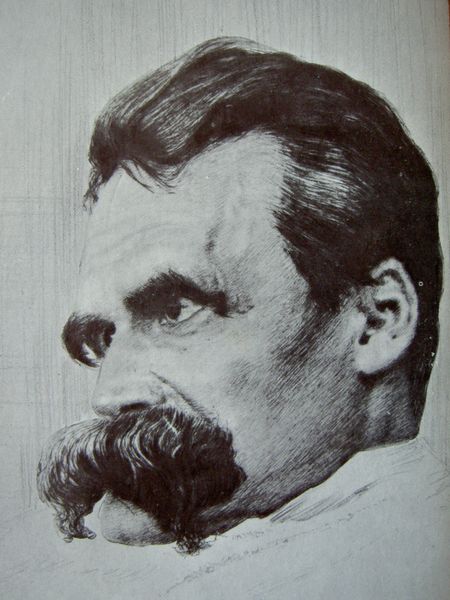
It reminds me of Nietzsche's claim that "There is no truth." 

Do you see the problem with that statement? Making a universal claim that there is no truth, is a universal claim of truth. The only difference is, his claim to truth is that it doesn't exist. However, it does exist in by saying it doesn't. 

I am not saying I am a follower of Nietzsche, nor am I saying that I believe all things can be described by language, but I think our attempts at showing our limitations funny, even ironic.


Saturday, September 13, 2008

Juggling=transcendental truth

I was talking to a friend yesterday about life, the universe, and everything and she mentioned that she was taking a yoga class (a university course). I said, "That's cool, but what's with the lacrosse balls?" She then replied that she was trying to learn how to juggle. I said, "What does juggling have to do with yoga?" She then said she didn't know, but that she had to learn for the class. I proceeded to question the logic, so she then blurted out, "It's transcendental." To which I responded, "WHAT?! Juggling is transcendental? Who told you that? That's crazy."

Or is it? Maybe juggling is the one thing I've been missing in life. Maybe juggling is what will help me discover that higher philosophic truth that has been alluding me all these years. Maybe juggling is that one small piece of the puzzle that Plato, Aristotle, Descartes, Hume, and Heidegger missed. I should have known. 
By throwing balls (or any other object) in the air we focus not on a single ball, nor on all the balls, but on the action of maintaining the balls airborne. We must focus, but not too much. We need to see the whole and the parts - simultaneously. It is a hermeneutical circle. To understand the whole we must understand the parts, and the meaning of the parts in sequence. Wow. 

I bet that juggling is only the beginning. I bet that there are amazing truths to be discovered in playing catch, jumping jacks, doing crossword puzzles, or eating oatmeal. And, now that I know the sources of all meaning, I can finally write the definitive work on universal truth.